How to get media coverage for your business? Use one of five free platforms. Check them daily, answer like a person instead of a brand, and you’ll have a shot at getting quoted without paying a PR agency.
That’s the whole method. This guide covers the five platforms I check every day for myself and for clients, which one to start with, how to answer so a reporter picks you, and what to do once your name is in print.
Key takeaways
- Five free platforms do the work: Qwoted, Featured, MentionMatch, HARO, and Source of Sources all publish what reporters are looking for right now. None of them cost anything.
- Speed and specifics win: Reporters get dozens of responses that sound the same. Answer in the first hour, sound like a person, and give them one detail only you have.
- The mention is the point: Every time your brand shows up across the web, you get more visible in search and in AI answers. One quote compounds into the next one.
Why media coverage is worth the effort
I look at journalist queries multiple times a day. It’s tedious. Then one of those queries turns into a mention in a publication your customers read, and it’s worth every minute.
The PR market is growing at a 7.18% annual rate, and digital and online media already make up 57.84% of that spend.
Here’s why that matters for your business. Ahrefs found that how often a brand gets mentioned across the web is the strongest predictor of showing up in Google’s AI Overviews. Brands in the top 25% for web mentions average 169 AI Overview mentions. Brands in the bottom half average zero to three.
Ahrefs went back and studied 75,000 brands in May 2026 and found the same thing again, with one addition. YouTube mentions turned out to be the strongest single signal of all. So a podcast that gets clipped to YouTube isn’t a small win. It’s the biggest one available to most business owners.
Backlinks came in last in both studies. Mentions beat links.
What platforms do reporters use to find sources?
Here are the five I check.
| Platform | What it is | What it costs |
| Qwoted | Matches journalists and podcast hosts with expert sources across industries | Free profile at qwoted.com |
| Featured | Journalist requests, podcast invites, and speaking opportunities in one place | Free, browse by category |
| MentionMatch | Matches B2B writers who need quotes with sources who want coverage | Free profile, 8,000 sources already on it |
| HARO | Up to three email digests a day, Monday through Friday, across nearly every topic | Free subscription |
| Source of Sources | Up to three daily emails, with a house rule that you only reply if you have something to add | Free, name and email only |
Qwoted
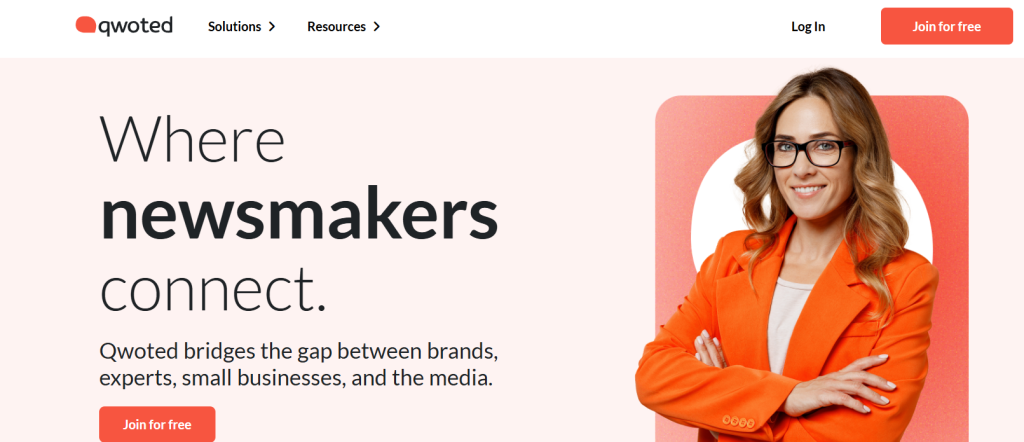
Qwoted connects journalists and podcast hosts with expert sources across industries. Build a free profile at qwoted.com, then browse open requests and respond to the ones that fit. Fill out your profile as much as you can, because reporters search the source database directly instead of waiting for replies to come in.
We use Qwoted the most. It has the widest range of opportunities across industries.
Featured
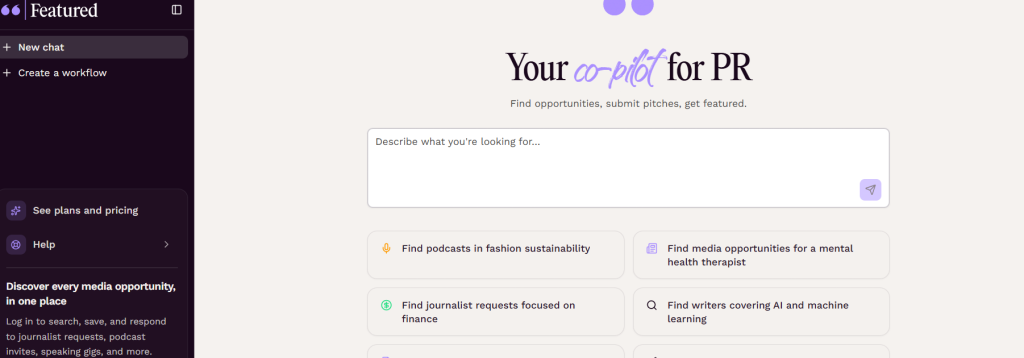
Featured is a discovery hub for journalist requests, podcast invites, and speaking opportunities. Featured also owns HARO as of April 2025, so you’ll see overlap if you use both. Log in, browse open requests by category, and submit a pitch to the reporter or podcast host.
MentionMatch
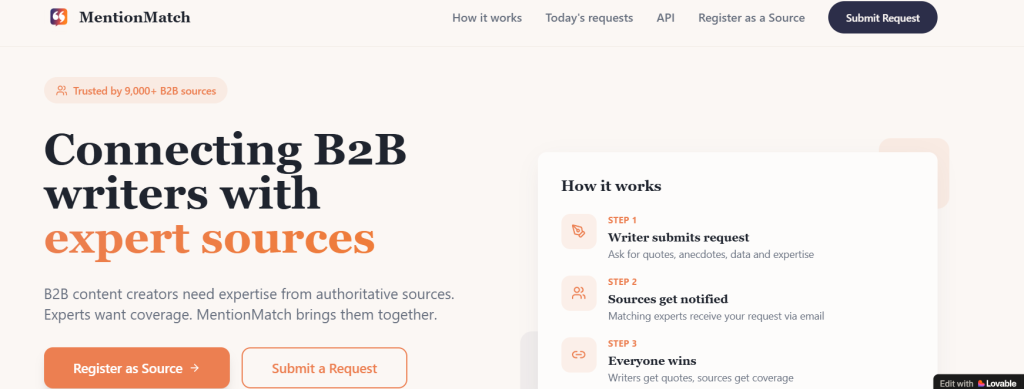
MentionMatch was called Help a B2B Writer until it rebranded, and it’s still the most B2B focused option on this list. It matches writers who need quotes with sources who want coverage. Set up a free profile and requests get matched to you instead of you hunting for them.
HARO
HARO is the original journalist query service. Cision rebranded it as Connectively in 2024 and shut it down that December. Featured bought it in April 2025 and brought back the free email digest. Sign up at helpareporter.com, and you’ll get up to three emails a day, Monday through Friday, sorted by topic.
Source of Sources
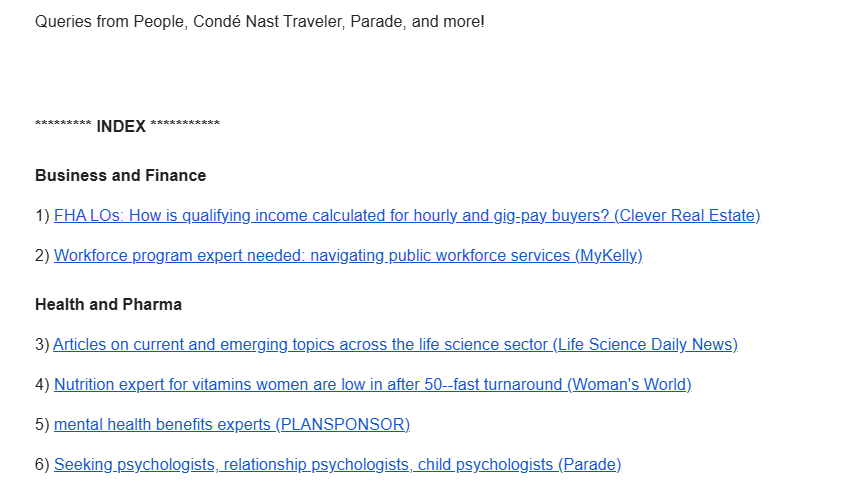
Source of Sources is free and strict about only replying when you have something to add. Sign up with your name and email, no profile required, and you’ll get up to three emails a day.
I haven’t replied to any queries through SOS yet.
My team watches all five and flags anything that looks like a fit. From there I decide whether it belongs to one of my clients or to me.
HARO alternatives worth using
Most people find this list because HARO disappeared and came back, and they want to know what else is out there. Here’s how I’d pick.
| If you | Start with |
| Sell to other businesses | MentionMatch, then Featured |
| Sell to consumers or run a local business | Qwoted |
| Want the highest volume of queries | HARO and Source of Sources, both by email |
| Want podcast and speaking invites, not just quotes | Featured |
| Have fifteen minutes a day and nothing more | Qwoted only |
You don’t need all five. Pick one, work it for a month, then add a second.
What makes a story worth covering
Reporters reject most of what lands in their inbox because it matters to the company and to nobody else. Before you respond to a query or pitch an idea, run it through four questions.
- Is it timely? Does it connect to something happening this week? Gold prices can make big moves, and my gold IRA client can explain what that means for retirement accounts. A housing story breaks, and my real estate software client has data on it.
- Does it affect people outside your company? A new office matters to your team. A new office that adds forty jobs to a town matters to a reporter.
- Is it surprising? If the reporter can guess your answer from the question, they don’t need you.
- Do you have something nobody else has? Your sales data. The questions customers ask on calls. A pattern you see that the reporter can’t get anywhere else.
If you can’t answer yes to at least two, skip the query and wait for a better one.
How to answer a query so a reporter picks you
A reporter gets dozens of responses per query, and most of them read the same way. Polished. Safe. A little robotic. When everyone sounds like AI, sounding like a person is the whole advantage.
Step 1. Answer fast
Most queries fill within a few hours. A good answer sent in the first hour beats a better answer sent that evening. Set a time each morning and check again after lunch.
Step 2. Answer the question they asked
Read what the reporter is writing. Answer that. Don’t send your company boilerplate and hope they find something usable in it.
Step 3. Keep it short
Two or three sentences per point, written the way you’d say it out loud. The reporter should be able to paste it straight into the story. Long responses get skipped because they create work.
Step 4. Give them one thing only you have
A quote is fine. A quote plus a number from your own data is the one that gets used.
Step 5. Include your credentials and a link
Name, title, company, website. Every time. That’s what turns a quote into a link.
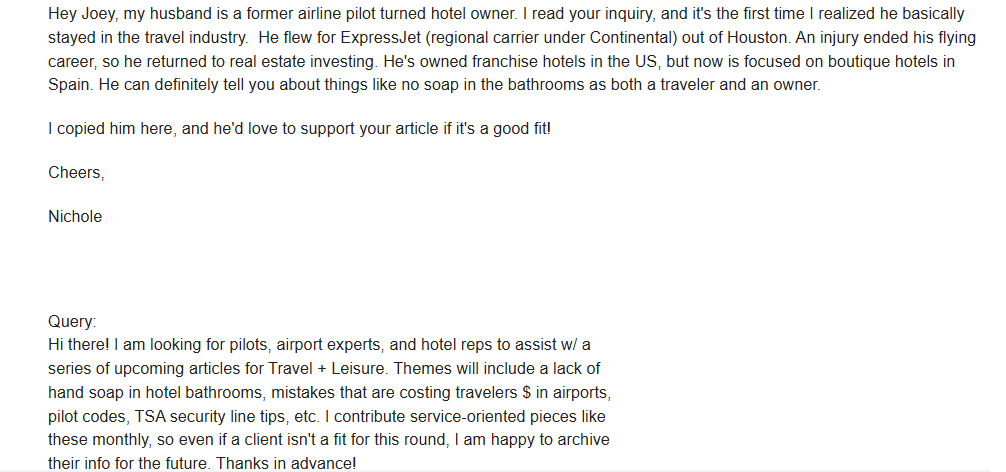
What media coverage from these platforms looks like
A few years ago, a reporter at Country Living posted a request about the struggles of real estate investing. I responded with what my husband and I went through. That turned into an interview and a feature in the article.
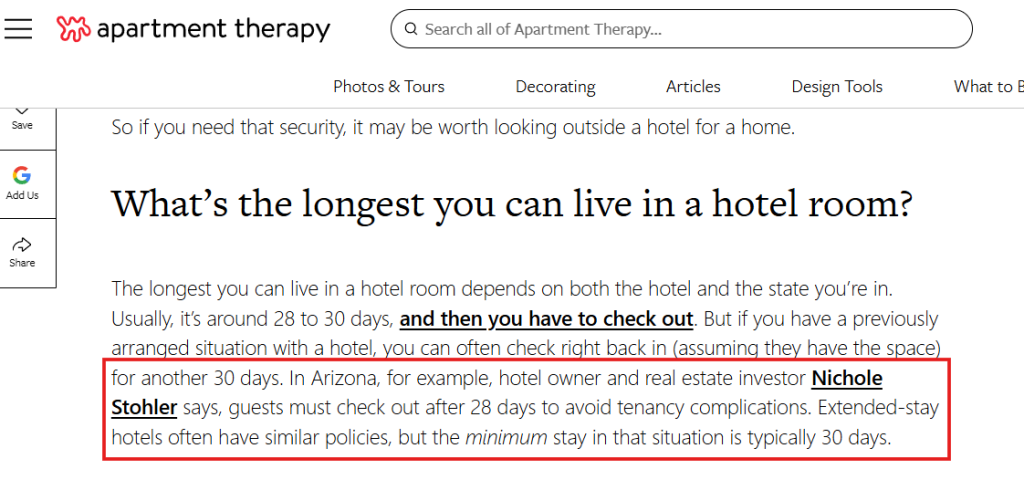
More recently, a reporter asked about people living in hotels. My husband is a hotel investor, so I answered. Apartment Therapy quoted me in the piece.
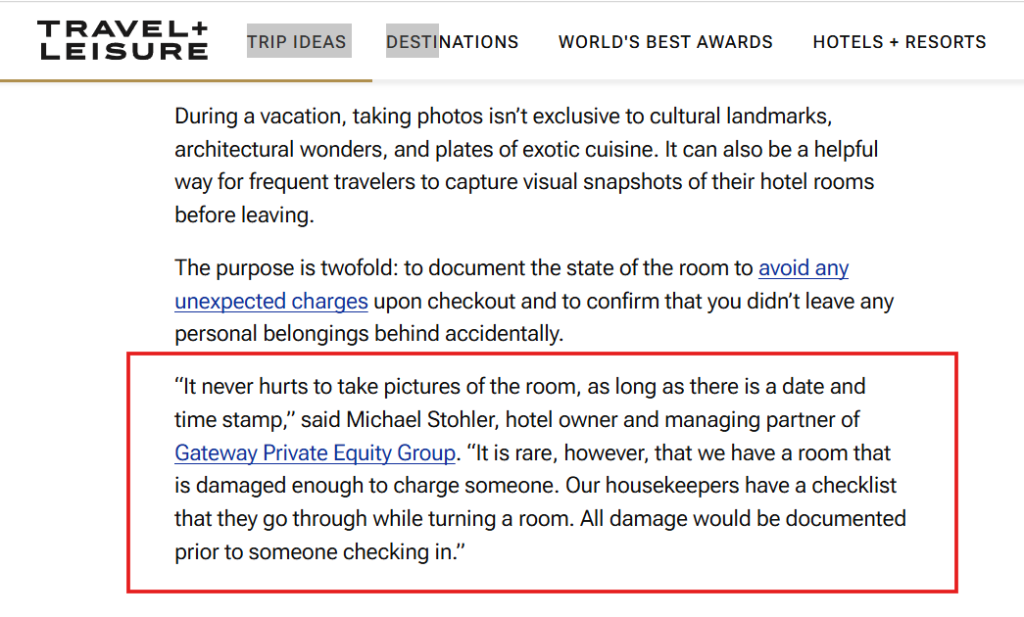
Then there was the reporter looking for pilots, airport experts, or hotel reps. That one ran in Travel and Leisure.
What to do after you get quoted
Don’t stop engaging once the article goes live.
Save the reporter’s name, outlet, and topic area in a spreadsheet. Post the story on LinkedIn and tag the reporter and the outlet. Add the outlet logo to your site. Then check back in about ninety days with something new that fits their topic area, not a pitch about you.
How one response turns into an ongoing relationship
These platforms get you connected to a reporter. What happens next is up to you.
Running an agency means I answer queries across a lot of industries, so I’ve worked with reporters more than once. When I have a property management client or a home audio video client with a story worth telling, I can reach out to someone who already knows my name instead of pitching a stranger.
Earned media is one part of a bigger digital PR strategy that also covers original data and cold pitching.
How to get media coverage for your business
Pick one platform from the table above and sign up today. Check it every weekday, twice a day if you can. Answer the way I described above. Then save every reporter who quotes you.
That’s it. No budget, no retainer, no agency.
If you’d rather have someone watching these platforms, filtering the noise, and building the reporter relationships for you, that’s what we do.
How to get media coverage: FAQs
How much does it cost to get media coverage?
Nothing, if you’re willing to do the work yourself. Every platform on this list is free to join. What costs money is paying someone else to monitor the queries, filter them, and build the reporter relationships.
What counts as media coverage?
A quote in a news article. A feature. An interview. A podcast appearance. A mention in a newsletter or a trade publication. Any time your name and your company show up in something you didn’t publish yourself.
Will a publication pay you for your story?
No, and you shouldn’t expect it. Reporters quote sources as part of their reporting, and payment would compromise that. The return is the mention, the link, and the credibility.
How long does it take to hear back after responding to a journalist?
It depends on the deadline, but queries move fast. Some reporters need a quote within hours. Respond as soon as you see one that fits, because the first solid answer usually beats a stronger one that arrives late.
Do you need to be a big brand to get quoted?
No. Reporters want a specific answer to a specific question, not a specific company size. A small business owner with direct experience is often a better source than a large brand’s communications team.
What’s the difference between a press release and answering a reporter’s query?
A press release pushes out news on your timeline. Answering a query means a reporter is already writing a story and needs a source to finish it. Query responses turn into coverage far more often, because the reporter already needs what you’re offering.