Do I need an SEO company? You need an SEO company if your buyer has to search for you before they know you exist. You probably don’t if they find you through referrals or word of mouth instead.
This guide covers what an SEO company does, the signs you’re ready to hire one, the signs you’re not, what it costs, and how to choose one that won’t waste your money.
Key takeaways
• How your buyer finds you decides whether you need an SEO company. An e-commerce home decor brand needs it. A referral-based real estate agent probably doesn’t.
• Old lead sources drying up, referrals disappearing, or spending marketing dollars with nothing to show for it are signs you may want to hire an SEO company.
• You have options like freelancers, agencies, and in-house hires. The right choice for you depends on your business goals.
What does an SEO company do?
Each of these areas could be its own detailed post. I’m not going to try to cram a full breakdown of every one into a single post, so here’s the high level.
Technical SEO
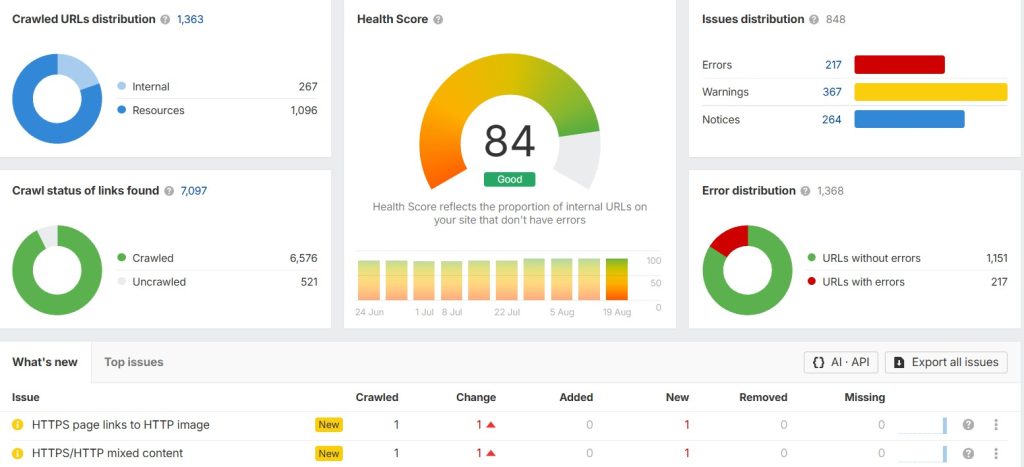
A technical audit looks at what’s keeping Google from crawling and indexing your site properly. This includes areas like:
• Page speed
• Mobile usability
• Broken links
• Duplicate content
• Site structure
And whether your pages are showing up in search results at all. Clients who haven’t invested in content yet usually have fewer technical issues here, simply because there’s less on the site to break.
But once we start creating content, we support it with an operational strategy for ongoing technical SEO.
Content strategy and keyword research
After auditing the foundation, the next step is developing a content strategy and doing keyword research to support that strategy. The way this works is that we:
• Define business parameters: Your goals, audience, positioning, and the topics you want to focus on.
• Keyword research: Looking at search intent, relevance, demand, competition, and conversion potential in those topic areas.
• Create a content plan: This includes priority pages, topic clusters, formats, publishing calendar, and internal links.
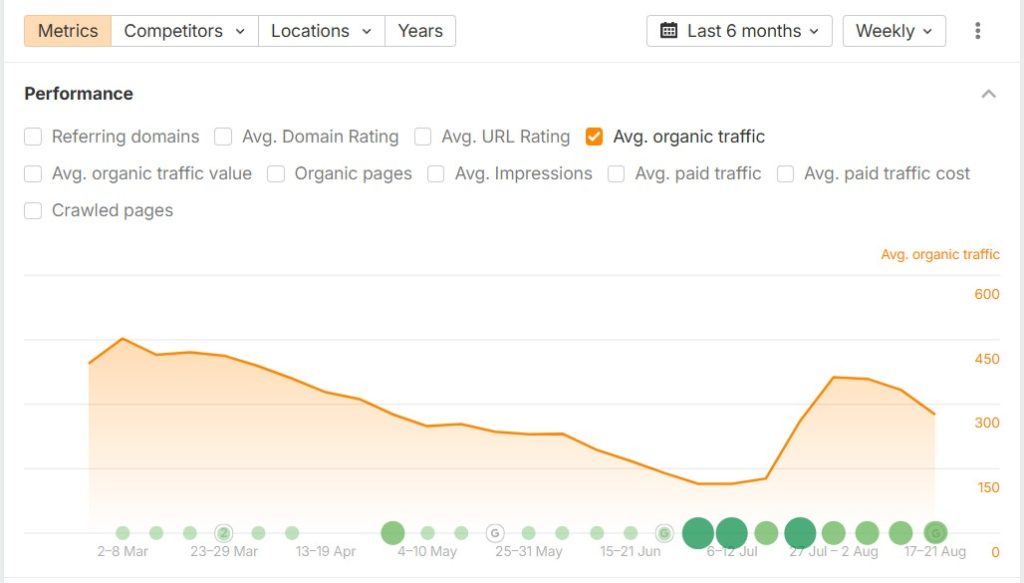
And finally, measuring performance to revise both the keywords and strategy over time. I use a number of tools to measure, including Ahrefs organic traffic, Google Search Console, and Google Analytics.
Link building and authority
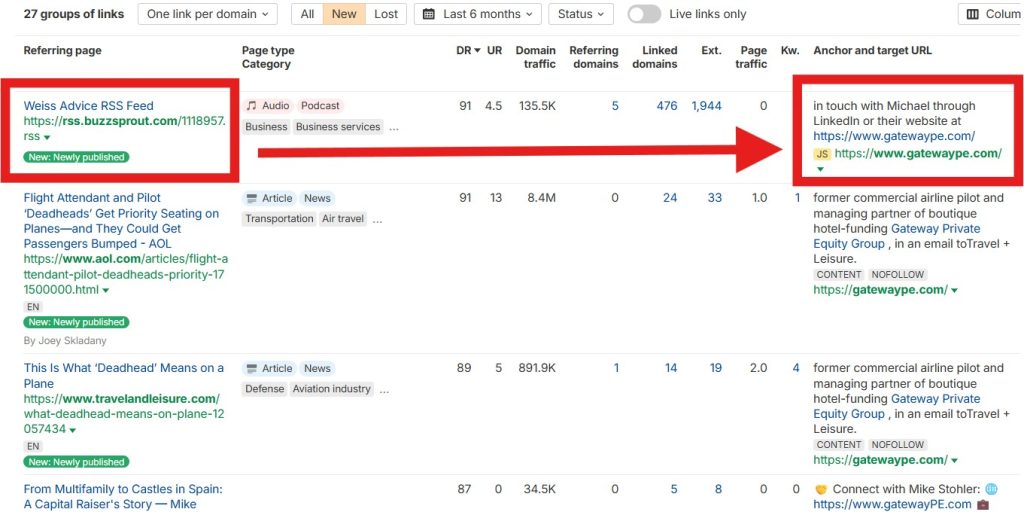
This includes digital PR. It’s earning links from named publications and building relationships with journalists to mention your brand. The strategy involves:
1) Create helpful and useful content that drives other sites to link to you naturally.
2) Provide quotable expert information that a journalist uses in an article that links back to your site.
3) Write a guest post on a high-authority site that then links back to your site naturally.
Reporting and ongoing strategy
I never want a client to feel locked into a contract where they’re not seeing value. Reporting should be a conversation, not a monthly PDF nobody opens. I also believe a good SEO company should bring you ideas that aren’t strictly SEO.
For example, for my Gold IRA client, I noticed their competitors running affiliate programs, so I brought them a full breakdown of how one would work and what to consider.
And recently, when one of their competitors published a YouTube video that started showing up in Google and AI search, I wrote a script for a similar video and gave their video editor the exact instructions to produce it.
The way I approach everything is to help clients win. The more results you get, the more I prove my value and the more both of our businesses grow.
Local SEO
Local SEO is built around location, and for anyone whose business requires in-person or a local element, you’ll need these specific services:
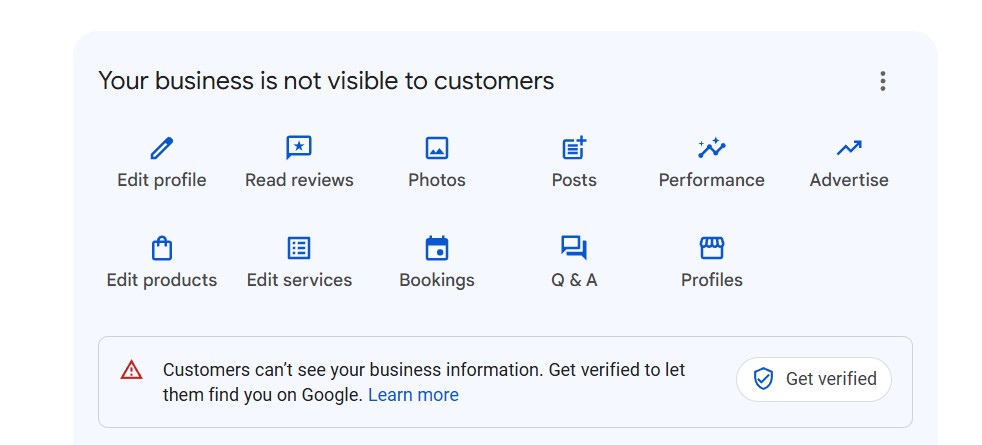
• Google Business Profile: This is the listing that shows up when someone searches “plumber near me” or “dentist in Scottsdale.” Optimizing your profile includes cleaning up your categories, service areas, and photos, and making sure your hours and information are correct.
• Reviews: These are one of the most important parts of local SEO, and it’s not so much that you need a massive quantity of reviews but rather a steady flow. An SEO company works with you on a strategy to increase reviews and respond quickly.
• Citations: Making sure your business name, address, and phone number show up exactly the same across Yelp, the Better Business Bureau, and other directories. If that information is inconsistent across the web, it hurts your local rankings.
• Website work: This involves creating service pages and location pages for your work and adding local keywords naturally. It also requires local schema markup that tells Google where you are and what you do.
• Local link building: Increasing awareness of your website by getting links from other authoritative sites like local news mentions, chamber of commerce listings, and partnerships with other businesses in your area.
Here is an example of Google Business Profile options. Note: this profile isn’t verified yet, which is a whole process. I’ve created a set of instructions for one of my clients to do this and even offered to come onsite and assist.
When do you need to hire an SEO company?
I have a client who sells a home decor product most people don’t know exists until they start searching for the broader category it belongs to. No amount of social media posting (outside of Pinterest) is going to get this product on someone’s radar.
That’s a perfect use case for SEO. It helps their brand show up along with the broader category search and drives awareness.
My Gold IRA client needs SEO and AI search for a different reason. Nobody finds a gold company through referrals or Nextdoor. They search for it in Google or in ChatGPT, or they ask general questions about physical gold. Someone already knows they want this kind of product, and the job is making sure they choose you.
Here are questions to help you decide if you need an SEO company:
Has your website traffic plateaued or started to decline?
Pull up Google Search Console and compare your last six months of clicks to the six before that. A flat or falling trend, even while you’re publishing at the same pace, is worth digging into.
Are competitors showing up in search results where you used to?
Search your top five keywords yourself, or run them through a rank tracker like Ahrefs. If someone who wasn’t there a year ago is now outranking you, they’ve invested in something you haven’t yet.
Do you have budget and nothing to show for it?
If you’re paying for social ads, print, or sponsorships and can’t trace a single lead back to any of it, that spending isn’t reaching the people searching for you.
Do you have resources in-house that can dedicate time to SEO?
If your marketing hire is already running email campaigns, social posts, and a referral program, they may not have time to focus on SEO. There are many areas of digital marketing and only so much time in the day.
Are you launching a new site, redesigning, or expanding into a new market?
A redesign can wipe out the URLs, titles, and internal links that took years to earn rankings. If you’re expanding into a new market, it means starting your content plan and keyword research over from scratch.
When do you not need an SEO company?
Not everyone needs SEO. Here’s when it doesn’t make sense:
Your buyer isn’t searching for you on Google or AI search
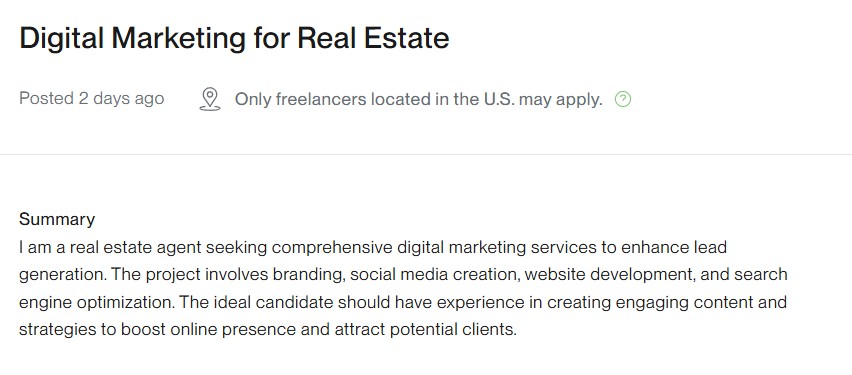
I saw a job posting on Upwork from a real estate agent asking for SEO, website development, and social media management all at once, to generate leads. I don’t think that agent needs to spend the same money on SEO as a gold company or a home decor brand. People don’t search for “real estate agent in Phoenix AZ.”
They search for properties, for home value estimates, for tips on selling a house.
My neighbor is a real estate agent, and she sends out a quarterly seasonal booklet about what’s happening in the area. When I’m ready to sell, or someone asks me for an agent, she’s who I think of. That’s consistent brand presence and marketing strategy that works for her buyer.
You can’t take on more business
If you’re booked out and can’t take on more work without hiring or expanding, more traffic doesn’t solve your problem. Growing visibility before you can fulfill the demand it creates just adds more work you can’t take on yet.
Your own website isn’t part of the buyer’s journey
If your customers buy through a marketplace, a distributor, or a partner’s site, and they never land on your own domain along the way, ranking your website doesn’t move the needle. It isn’t part of how they find or choose you, so SEO on it doesn’t help either.
You haven’t nailed down who your customer is yet
If you’re still figuring out positioning and messaging, content built around today’s answer gets rewritten once that changes. Settle your positioning first, then spend money on content.
SEO company vs in-house vs freelancer, or do it yourself?
There’s many different ways you can approach adding SEO to your marketing.
| Option | Typical cost | Speed and expertise | Best fit |
| Freelancer | Around $1,350 a month on average, or $100 to $150 an hour | Fast for narrow tasks, thinner on full strategy | One-off projects or a single area, like technical fixes |
| Agency | Roughly $2,500 to $6,500 a month or more | Full team covering strategy, content, links, and technical work together | Businesses ready to invest in an ongoing strategy across every part of SEO |
| In house | Average SEO specialist salary is about $67,000 a year, plus benefits and overhead | Deep company knowledge, but usually stretched across too many marketing disciplines | Larger companies that can hire a dedicated specialist, not a generalist |
| DIY | Your time only | Slow, limited to what you can learn and do yourself | Local businesses with light competition, or a Google Business Profile cleanup |
| Done with you | Bigger upfront engagement, then lower ongoing cost | Agency sets strategy and oversight, client handles day-to-day execution | Businesses that need a lower retainer and can execute with guidance |
None of these are mutually exclusive. Many of my agency’s engagements combine a specialist in-house with agency oversight on strategy.
How much does an SEO company cost?
A 2024 Ahrefs survey found that freelancers average around $1,349 per month, agencies average $3,209 per month, and independent consultants average $3,250 per month. Hourly rates vary widely, from about $72 an hour on the low end to $171 on the high end, with $75 to $100 the most common range. One-off projects typically run $2,501 to $5,000, though agency projects can run closer to $9,500.
Our retainers run $2,500 to $6,500 a month. Where a client lands within that range depends on the level of work. A business with years of foundational gaps, no content cadence, no digital PR, and no technical maintenance needs more work upfront than a business that just needs ongoing management.
In-house, the average SEO specialist salary is about $67,000 a year, with most falling between $53,000 and $71,000. Add benefits, payroll taxes, and management time on top of that, and the total cost of an in-house hire runs higher than just the salary number.
Done with you model
I have a client in assisted living who didn’t have the budget for a large ongoing retainer, so I structured a bigger upfront engagement to fix the website, build a full content plan, and get the technical and linking work in place.
After that, we moved to a done-with-you model, where the client handles more of the day-to-day and I provide strategy and oversight. This keeps ongoing costs down without leaving them without support.
How do you choose the right SEO company?
Google’s own guidance on hiring an SEO is a good starting point before you talk to anyone. Here are specific things to ask about:
• What will the first 90 days look like for your business? They should know your competitors and lay out a sequence built specifically around your industry.
• Which AI platforms do they optimize for, and how does that work compare to classic SEO?
• Who will work on your account and how many other accounts are they managing?
• If they offer to run an audit, only give them read access to Search Console at first, not write access. A company that pushes back on that is a company to walk away from.
What should you expect once you hire an SEO company?
Realistic SEO work takes 90 days before you see meaningful movement, and six months to a year before it starts to compound. Anyone promising faster is usually cutting corners.
Reporting should feel like a regular conversation, not a document dump. With my local SEO clients, I hold regular status meetings, bring new ideas as I see what’s working for their competitors, and let the client own what makes sense for their team, like website updates.
Why does SEO look different in 2026?
AI Overviews changed SEO. A Seer Interactive study of more than 3,100 informational search queries found that organic click-through rates on queries with an AI Overview dropped 61% since mid-2024. Even queries without an AI Overview saw a 41% year-over-year decline, as more searches move into ChatGPT and other AI tools instead of a list of blue links. Brands cited inside AI Overviews still earned 35% more clicks than brands that weren’t.
This is exactly why my home decor client and my Gold IRA client, the way I described above, need both Google search and AI search instead of picking one. Keyword-only content isn’t enough anymore. AI tools reward proprietary data, expert perspectives, and content that answers a question completely, not a page built around a keyword and nothing else.
How do you decide if you need an SEO company?
Think about your buyer. If Google or AI search is part of how they find you, even for one product or service line, it’s worth investing in SEO.
Ready to find out where your next marketing dollar should go? Click here for a free audit, and I’ll show you exactly where the opportunity is.
Do I need an SEO company: FAQs
How do I know if my SEO company is any good?
Look for the same things I described above. Case studies with specific numbers, a clear explanation of their process, and flexibility instead of a rigid contract. If they can’t tell you what results to expect and when, that’s your answer.
Can I do SEO myself before hiring someone?
Yes, especially if you fall into the “not yet” category above. Optimizing your Google Business Profile, building an email list, and getting your basic site health in order are all things you can do before paying for an ongoing strategy.
Is SEO worth it for a small business?
For many small businesses, yes. Especially when customers actively search online for the products or services they offer. You do not need to compete for every broad industry keyword. Focus on a small set of relevant, high-intent searches your ideal customers use, then create the best page or local presence for those needs.
How long before SEO shows results?
Plan on six months to a year for SEO results to begin compounding, provided you keep publishing useful content, improving the site, and earning relevant links.
Is SEO dead now that AI search exists?
No. AI Overviews and chatbots pull from the same foundation SEO builds: crawlable sites, structured content, and proprietary information. Brands cited inside AI Overviews earn more clicks than brands that aren’t. Skip SEO, and there’s nothing for AI search to cite.